Free Doesn't Mean Cheap: The Real Price Tag Hiding Inside Your Open Source Stack
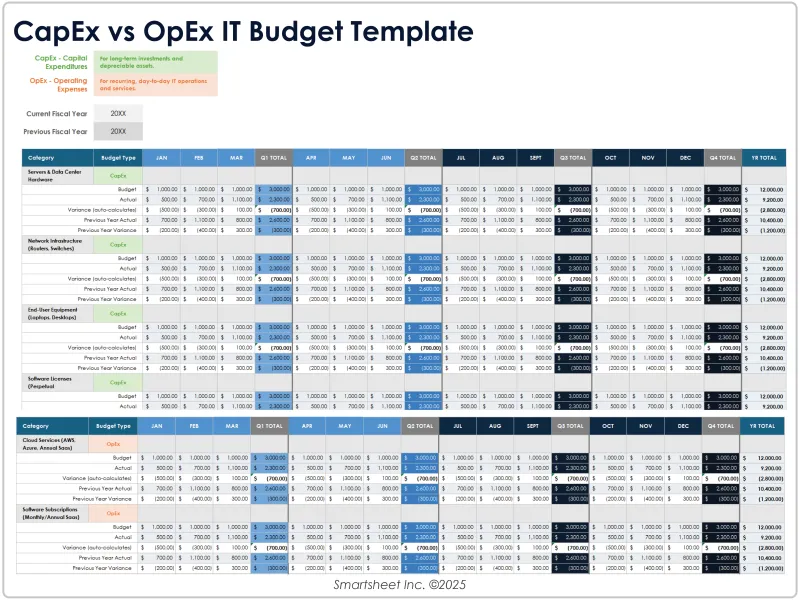
Photo: enterprise software cost analysis budget spreadsheet technology, via www.smartsheet.com
There's a pitch that gets made in boardrooms across America every single week. An IT director pulls up a slide, points to a column of zeroes under "licensing fees," and makes the case for switching to open source. The logic sounds airtight: why pay Oracle or SAP six figures a year when you can grab something off GitHub for nothing?
Except — and this is the part that doesn't make it into the slide deck — "nothing" has a funny way of adding up.
We're not here to trash open source. Honestly, the entire mission of this community is built on the idea that open, shared technology drives collective progress. But part of that honesty means having a real conversation about what open source actually costs when you're deploying it inside a company with compliance requirements, legacy systems, and a help desk that's already stretched thin.
The Myth of the Zero-Cost License
The "free as in beer" framing of open source has always been a little misleading, but it's become especially dangerous as enterprises lean harder into open source adoption. When organizations calculate total cost of ownership — TCO, in the acronym-heavy world of enterprise IT — they typically start and stop at licensing fees. That's the wrong place to stop.
Consider what's actually required to run, say, a self-hosted open source data platform at scale. You need engineers who understand the codebase deeply enough to configure it, troubleshoot it, and update it safely. You need someone keeping an eye on the project's security advisories. You need a plan for what happens when the upstream maintainers release a breaking change — or, increasingly common, when the project gets abandoned entirely.
None of that is free. None of it even comes close.
A 2023 analysis by Forrester Research found that the labor costs associated with implementing and maintaining open source tools frequently exceed proprietary licensing fees within the first two years of deployment. That's not a condemnation of open source — it's a reality check about where the actual costs live.
Compliance Is a Full-Time Job
Here's a hidden cost that almost never gets factored in upfront: license compliance.
Open source doesn't mean "no license." It means a different kind of license — and there are dozens of them, each with different obligations. The GPL family requires that derivative works also be open source. The AGPL has specific implications for software delivered over a network. Apache 2.0, MIT, and BSD licenses are more permissive, but they still come with attribution requirements.
For a startup with five engineers, this is manageable. For a company with hundreds of developers pulling packages from npm, PyPI, and Maven every day, tracking license obligations becomes a genuine operational challenge. Tools like FOSSA or Black Duck exist specifically to help with this — and they cost money. The legal reviews they inform cost even more.
Miss a GPL obligation and you're not just looking at a theoretical risk. Companies have faced lawsuits over open source license violations. The Software Freedom Conservancy has pursued enforcement actions against major corporations. Getting this wrong isn't a hypothetical.
The Integration Tax
Proprietary software vendors sell something that open source communities generally can't: accountability. When you pay SAP or Salesforce, you're buying a phone number to call when things break, an SLA that promises uptime, and a professional services team that will — at a price — make your implementation work.
Open source gives you the code. What you do with it is largely your problem.
This creates what some engineers half-jokingly call the "integration tax" — the hidden cost of making open source tools talk to each other and to your existing infrastructure. Enterprises typically run dozens of systems. Getting an open source observability platform to play nicely with a legacy ERP system and a modern cloud data warehouse isn't just a weekend project. It can stretch into months of engineering time.
And when you're paying senior engineers $150,000 to $200,000 a year in most US tech markets, months of their time is not a rounding error.
Security: The Audit Nobody Budgets For
The Log4Shell vulnerability in late 2021 was a wake-up call that a lot of organizations still haven't fully processed. A critical flaw in a widely used open source logging library — one that was embedded in thousands of enterprise applications — exposed companies worldwide to serious risk. Many of those companies had no idea Log4j was even in their stack.
That's the nature of modern software: open source components get bundled inside other components, which get bundled inside commercial products, which get deployed inside enterprise environments. The dependency graph gets deep fast.
Auditing that graph — understanding what open source you're actually running, whether it's been patched, and whether it has known vulnerabilities — is a real operational cost. The Cybersecurity and Infrastructure Security Agency (CISA) has pushed hard for software bills of materials (SBOMs) as a baseline security practice. Building and maintaining an SBOM requires tooling, process, and people.
Again: not free.
So When Does Open Source Actually Win?
None of this means enterprises should run back to proprietary vendors. That would be the wrong takeaway entirely.
Open source wins — genuinely and decisively — in specific circumstances. When your team already has deep expertise in the technology. When the community behind the project is large, active, and well-funded (think Linux, PostgreSQL, or Kubernetes). When the use case is standard enough that you're not doing heavy customization. When a vendor offers commercial support on top of the open source core, giving you the best of both worlds.
The Linux Foundation's research consistently shows that organizations with mature open source program offices (OSPOs) — dedicated teams that manage open source strategy, compliance, and contribution — extract dramatically more value from open source than organizations that treat it as a free-for-all.
The pattern is consistent: the companies that benefit most from open source are the ones that invest deliberately in it.
Making Smarter Build-vs-Buy Decisions
The honest framework for evaluating open source versus proprietary software isn't "which one costs less on paper." It's a more nuanced set of questions.
What's our internal expertise level with this technology? Do we have engineers who know this stack well, or will we be learning on the job?
How active and stable is the upstream project? A project with a single maintainer and three years of commit history is a different risk profile than one backed by a foundation with dozens of corporate sponsors.
What are the compliance obligations, and do we have the legal and engineering capacity to meet them?
What's the realistic integration lift, and does our team have the bandwidth to absorb it?
When you run those questions honestly, sometimes open source still wins. Sometimes it doesn't. And sometimes a hybrid approach — a commercial distribution of an open source project, with vendor support — threads the needle.
The point isn't to be cynical about open source. It's to be clear-eyed. The community-driven, shared-knowledge model of software development is genuinely powerful. But power doesn't come free. Understanding the real costs is what lets organizations use open source strategically — and that's how everybody wins.