One Rotten Root: How a Single Abandoned Package Can Bring Down Your Whole Project
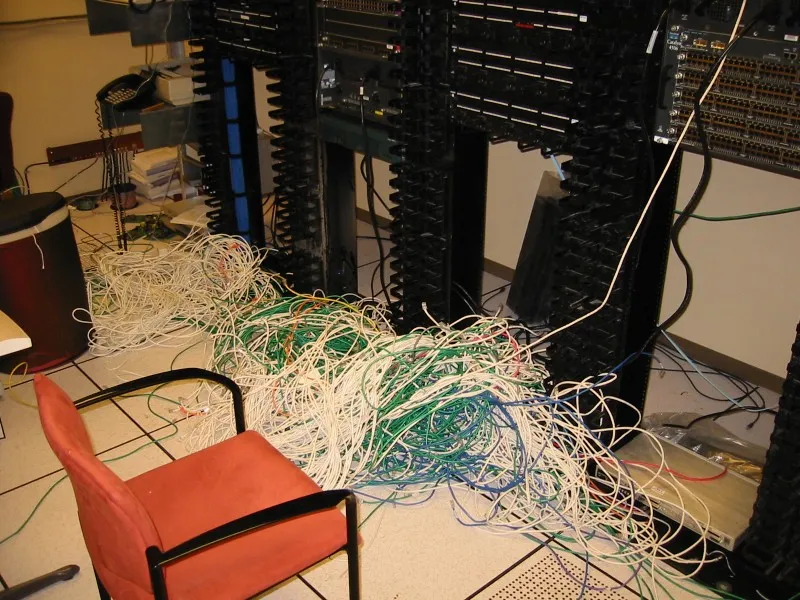
Photo: Bill Bradford, CC BY 2.0, via Wikimedia Commons
Picture this: you're a developer at a mid-sized startup. Your app is humming along, your deployment pipeline is clean, and your team is shipping features at a solid clip. Then one morning, a security researcher drops a CVE report that stops everyone cold. The vulnerability isn't in your code. It's not even in a library you consciously chose. It's buried four levels deep in your dependency tree — in a package last updated during the Obama administration.
This isn't a hypothetical. It's basically Tuesday in modern software development.
The open source ecosystem is one of the most extraordinary collective achievements in the history of technology. Millions of developers sharing code freely, building on each other's work, compressing what would take decades into months. But that same interconnectedness is also a structural vulnerability that the industry has been slow to fully reckon with.
The Dependency Iceberg
Most developers have a reasonable handle on their direct dependencies — the packages they deliberately pull into a project. What's harder to track is everything underneath. A single npm install or pip install command can quietly drag in dozens of transitive dependencies: libraries that your libraries depend on, and so on, cascading downward.
A 2023 analysis of popular JavaScript packages found that some widely-used libraries carried over 800 transitive dependencies. The overwhelming majority of those were never audited by the team using the top-level package. They were just... there. Silently running.
When any one of those packages goes unmaintained — no security patches, no compatibility updates, no one watching the issue queue — it becomes what security folks call a "latent vulnerability." It may not cause problems immediately. But it's waiting.
The 2021 Log4Shell incident is the case study everyone reaches for, and for good reason. Log4j was a logging utility so ubiquitous that most teams didn't even know they were running it. When a critical remote code execution flaw was disclosed, organizations from Amazon to the federal government scrambled to figure out where the library lived inside their systems. Many of them couldn't answer that question quickly. That's the dependency trap in its most extreme form.
Abandoned, Not Forgotten — Just Broken
The problem isn't just security. Abandoned packages also accumulate technical debt that quietly degrades the software built on top of them.
Take the case of node-uuid, a JavaScript library for generating unique identifiers that was eventually superseded by uuid. For years, projects that hadn't updated their dependency references kept pulling in the older, less-maintained version. It still worked — until it didn't, as Node.js evolved and compatibility cracks started showing. Teams that had never consciously thought about their UUID library suddenly found themselves debugging mysterious failures in production.
Or consider [left-pad](https://en.wikipedia.org/wiki/Npm_left-pad_incident), the infamous 11-line JavaScript package that, when its author unpublished it from npm in 2016, broke thousands of builds worldwide — including Babel and React. The package itself was trivial. The dependency on it was not. The whole episode exposed how fragile the assumption of permanence really is in open source infrastructure.
Smaller projects are especially exposed. A solo developer builds a useful tool, publishes it, and moves on with their life. The tool gets incorporated into other projects, which get incorporated into others, and suddenly there's a chain of production software hanging off code that hasn't seen a commit in four years and has an open issue titled "Critical bug — anyone still maintaining this?"
The Systemic Gaps Nobody Wants to Talk About
Here's the uncomfortable truth: the open source model doesn't have a great built-in mechanism for handling the lifecycle of a package after its creator loses interest. There's no formal deprecation process. No mandatory handoff protocol. No equivalent of a building inspector who checks whether the foundation is still sound.
Tools like Dependabot, Snyk, and FOSSA have made real progress on automated vulnerability scanning. GitHub's dependency graph gives developers more visibility than they had five years ago. But these tools are reactive. They flag problems after a CVE has been filed, after a maintainer has already walked away. They don't surface the slow rot of a package that's technically functional but effectively dead.
The open source funding problem compounds everything. The libraries most likely to go unmaintained are the ones built by individual contributors who never had institutional backing. Meanwhile, those same libraries often end up embedded in enterprise software worth billions. The incentive mismatch is staggering.
Some organizations have started taking this seriously. The OpenSSF (Open Source Security Foundation), backed by major tech players including Google, Microsoft, and IBM, has invested in tools like Scorecard, which evaluates the security health of open source projects across dozens of criteria. The CISA has pushed for a software bill of materials (SBOM) standard that would require organizations to document exactly what's in their software supply chain. These are meaningful steps.
But adoption is uneven, and for many smaller development teams — especially at startups and nonprofits — these practices still feel like enterprise overhead that doesn't fit their workflow.
What Actually Helps
The community-driven ethos that makes open source powerful is also what makes collective action on this problem possible. Here's what the ecosystem needs more of:
Dependency audits as a cultural norm. Running npm audit or pip-audit should be as routine as writing tests. Teams that treat dependency hygiene as an afterthought are building on blind faith.
Transparent lifecycle signaling. Package registries should make it dramatically easier to see when a project was last updated, whether it has active maintainers, and whether it's been formally archived. Some registries do this better than others. All of them should.
Funded stewardship for critical infrastructure. Organizations like Tidelift and the Sovereign Tech Fund in Germany are experimenting with models that pay maintainers to keep critical packages healthy. These efforts need to scale. The open source packages running inside Fortune 500 infrastructure deserve more than volunteer goodwill.
Fork culture without the stigma. When a critical package goes dark, the community's ability to fork and continue maintenance is one of the ecosystem's great strengths. But forking often carries a reputation cost, as if it signals conflict rather than responsibility. Reframing active forks of abandoned projects as community service — not drama — would help.
The Shared Responsibility Problem
What makes the dependency trap so hard to escape is that no single actor is clearly at fault. The original maintainer who moved on wasn't obligated to stay forever. The developer who pulled in the package did so in good faith. The organization running the software may not have even known the package existed.
But "no one is responsible" and "everyone is fine" are not the same thing. The open source community has built something genuinely remarkable — a shared foundation that powers most of the modern internet. Protecting that foundation requires treating it like the critical infrastructure it actually is.
The dependency trap is real, and it's not going away on its own. But it's also a solvable problem — if the people who benefit most from open source are willing to invest in keeping it healthy. That means funding, tooling, transparency, and a cultural shift toward treating software supply chain hygiene as a first-class concern rather than a box to check after something breaks.
The rot doesn't announce itself. That's exactly why you have to go looking for it.


