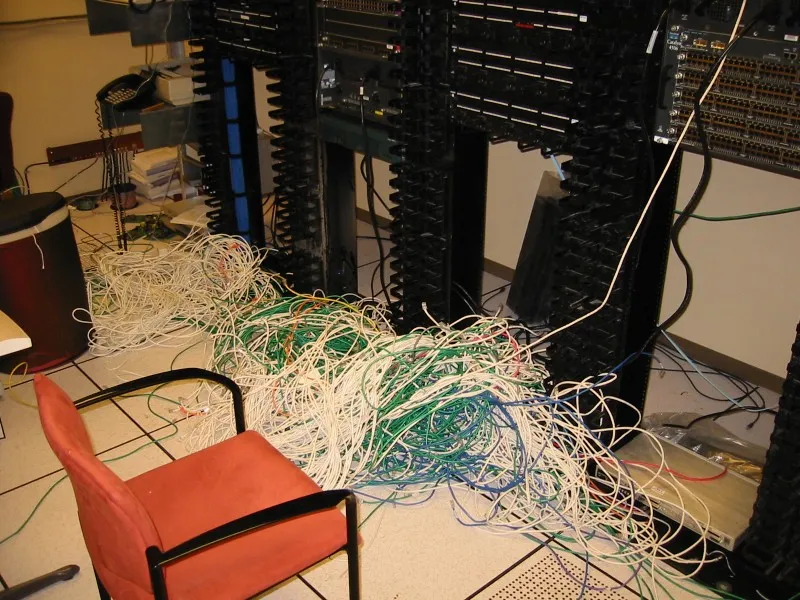
The Bill Comes Due: How Your Open Source Stack Is Quietly Running Up a Tab You Haven't Seen Yet
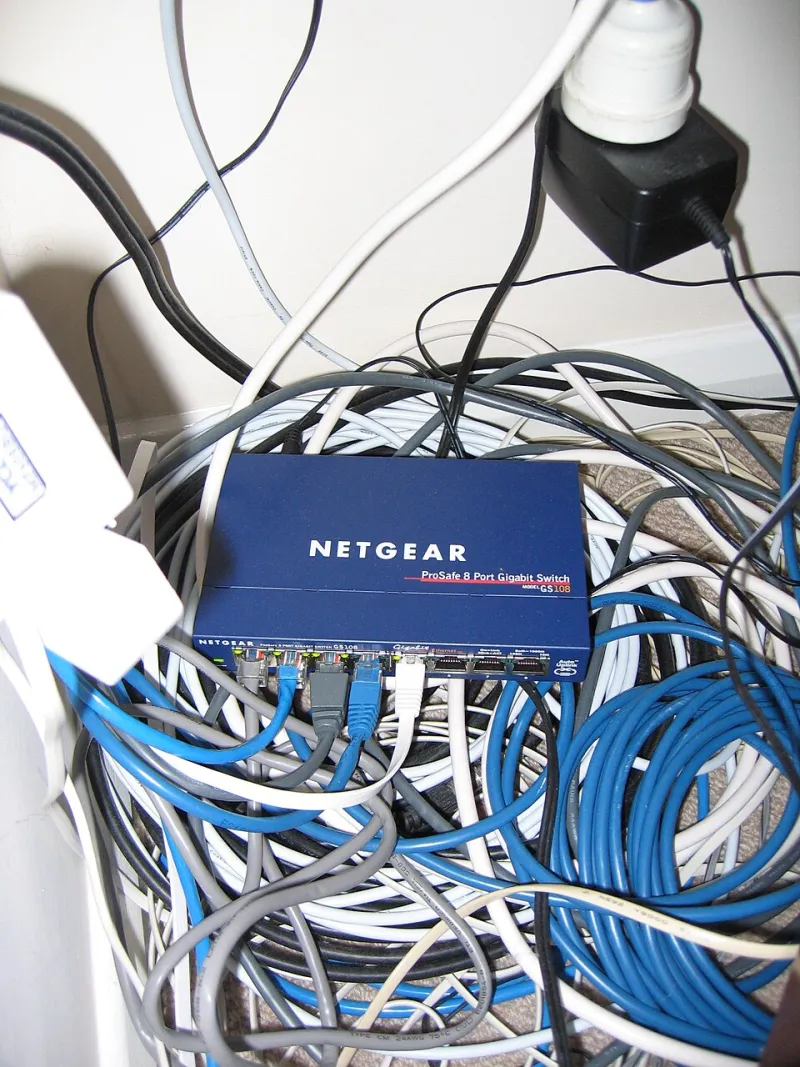
Photo: William Hook , CC BY-SA 2.0, via Wikimedia Commons
There's a particular kind of confidence that comes with building on open source. You're standing on the shoulders of thousands of contributors, shipping faster, spending less, and feeling genuinely clever about it. The license is free. The community is active. The GitHub stars are impressive. What's not to love?
A lot, it turns out — once you start looking at the parts of the ledger most engineering teams never open.
The conversation around open source costs has gotten sharper in recent years, especially as organizations scale. What starts as a handful of well-chosen libraries can quietly evolve into a dependency graph that resembles a bowl of spaghetti more than a clean architecture diagram. And every node in that graph carries a cost that never shows up on the invoice.
The Illusion of Zero-Cost Infrastructure
When finance teams look at open source adoption, they see license savings. That's real — software licensing costs can be genuinely brutal, and replacing proprietary tools with open alternatives has saved companies millions in direct spend. Nobody's arguing with that math.
The problem is what gets left off the balance sheet.
Consider a mid-sized SaaS company — the kind that's common across the US tech corridor, from Austin to Atlanta to the Bay Area — that builds its backend on a stack of roughly 200 direct and transitive dependencies. Each of those packages has its own release cadence, its own vulnerability disclosure timeline, and its own maintainer situation. Some are backed by foundations. Some are maintained by a single developer in their spare time. Most fall somewhere in between.
Now multiply that by the engineering hours required to track updates, test compatibility, investigate breaking changes, and respond to CVEs. According to research from the Linux Foundation and Harvard's Laboratory for Innovation Science, the average organization dramatically underestimates the labor cost of dependency maintenance — often by a factor of three or more.
That's not a rounding error. That's a budget line item hiding in plain sight.
Version Sprawl and the Compatibility Tax
Here's where things get genuinely expensive: version management at scale.
When a core dependency releases a major update — say, a widely-used authentication library or a data serialization package — the ripple effects can be staggering. Teams have to audit which services use which version, identify breaking changes, update dependent packages, run regression tests, and coordinate deployments across environments. In a microservices architecture, that process can touch dozens of repos simultaneously.
One engineering team at a logistics startup in the Midwest described spending nearly six weeks managing a single major version migration across their stack — not because the library was poorly designed, but because their dependency tree had grown so interconnected over three years that there was no clean path through. The "free" upgrade cost them roughly $200,000 in engineering time when all was said and done.
That's the compatibility tax. And it compounds.
Security Patches: The Maintenance Burden Nobody Budgets For
The security angle is where hidden costs turn into genuine organizational risk.
The past few years have delivered some high-profile lessons on this front. The Log4Shell vulnerability in late 2021 sent security teams across the country scrambling to inventory every application that used the affected Java logging library — a package so embedded in enterprise software that many organizations didn't even know they were running it. The remediation effort cost the industry an estimated $10 billion globally, according to some analyses.
That wasn't an anomaly. It was a preview.
Open source packages accumulate CVEs regularly. The National Vulnerability Database is full of them. And while many vulnerabilities are patched quickly by active maintainers, a meaningful percentage sit in projects that are minimally maintained or effectively abandoned — which means the patch either never comes or arrives months after the disclosure.
For organizations without dedicated security engineering capacity, the triage process alone is a significant ongoing expense. You need someone to monitor advisories, assess impact, prioritize remediation, and verify that patches actually close the vulnerability in your specific implementation context. That's not a one-time project. That's a job.
Calculating the True Total Cost of Ownership
So how do you actually get a handle on what your open source dependencies are costing you? A few useful dimensions to map out:
Maintenance velocity of each dependency. When was the last commit? How quickly do maintainers respond to issues? Is there a single point of failure in the contributor base? Tools like Scorecard from the OpenSSF can help surface some of this data systematically.
Transitive dependency depth. Your direct dependencies are just the top layer. The packages those packages depend on — and the packages those depend on — are where a lot of risk hides. Dependency scanning tools can map this out, but the important step is actually reviewing what you find.
Historical upgrade friction. Look back at the last 12 months. How many hours did your team spend on dependency-related work? Version upgrades, security patches, compatibility debugging? That number, annualized and projected forward against your growth rate, is a rough lower bound on your ongoing dependency tax.
Criticality weighting. Not all dependencies carry equal risk. A package that touches authentication, encryption, or data serialization deserves a different level of scrutiny than a utility library that formats dates. Build a tiered model and allocate your maintenance attention accordingly.
Replacement cost. For your highest-risk dependencies, have a rough answer to the question: if this package disappeared or became actively hostile tomorrow, what would it cost us to migrate off it? That number should inform how much redundancy or contingency you build in.
The Organizational Response: Dependency Governance Without the Bureaucracy
None of this is an argument against open source. The collaborative model has produced genuinely extraordinary infrastructure, and the community ethos behind it aligns closely with what we believe in here at NetBux — shared knowledge, collective progress, building things that work for everyone. That's real and worth protecting.
But protecting it means being honest about the full picture. Organizations that treat open source as purely zero-cost are setting themselves up for a reckoning. The debt accumulates quietly, and then it doesn't.
The healthiest approach isn't to lock down your dependency choices or swing back toward expensive proprietary alternatives. It's to build lightweight governance practices that keep the picture clear. A dependency review as part of your onboarding process for new packages. A quarterly audit of your highest-criticality components. A shared internal registry that tracks the health and maintenance status of what you're running.
None of that requires a dedicated team or a massive tooling investment. It requires treating your dependency choices with the same intentionality you'd apply to any other infrastructure decision.
Because free doesn't mean costless. It just means the invoice arrives differently — in engineering hours, in security incidents, in the slow drag of accumulated technical debt that makes every new feature a little harder to ship than the last.
The tab is running. It's worth knowing what's on it.